
SOMC16034K70GRZ: Noise and Performance Analysis in Analog-Digital Systems
SOMC16034K70GRZ: Interference and Performance Analysis in Mixed-Signal Systems
Introduction: In measurement applications and embedded solutions, analytical data shows that correctly selected noise parameters and evaluation methods can enhance the final digitization accuracy. Specifically, when integrating miniature input circuits, noise characteristics and linearity determine whether the required system dynamics are achieved. SOMC16034K70GRZ plays a key role here as a component for evaluating the impact of interference on conversion parameters.
The study relies on standardized approaches for power and ground plane separation, comparative SNR/SINAD measurement methodologies, and practical recommendations for routing and filtering. Experience shows that a combined approach—hardware filtering plus precise metrology—yields the most reproducible results when analyzing interference at ADC inputs.
1 — Overview of SOMC16034K70GRZ and Its Role in Analog-to-Digital Systems
1.1 — Key Technical Specifications for Noise Immunity Evaluation
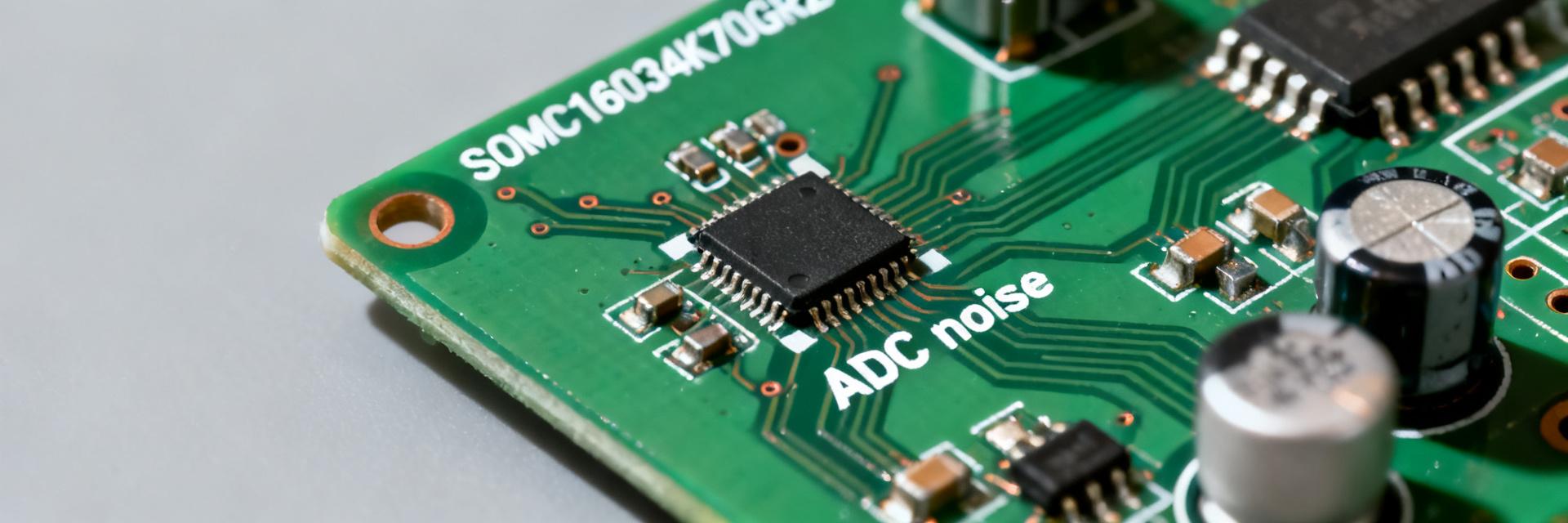
Engineer's Perspective: When analyzing interference, parameters affecting the noise immunity of the input stage—such as input range, source resistance, input differential, and specified noise levels—are vital. Evaluation based on the table above allows for quick identification of circuit bottlenecks and the selection of optimal measures to reduce the impact of external and internal noise.
1.2 — Typical Applications and Noise Immunity Requirements
Typical application areas include measurement modules, audio systems, and precision sensors, where the stability of integrated noise and harmonics across a wide range of input signals is critical. For each scenario, a set of long-tail keywords describing requirements is defined: for example, "SOMC16034K70GRZ noise characteristics" or "noise immunity in measurements," which aids in modeling real-world conditions.
2 — Interference Data and Analysis: Measurements, Metrics, and Interpretation
2.1 — Measurement Methodology and Experimental Setup
- Shielded chamber
- Low-jitter source
- Programmable interference sources
- Precision VREFs
Practice: It is essential to document connection schemes, source parameters, and use calibrated instruments (spectrum analyzers, generators). This configuration ensures the reproducibility of SNR, SINAD, and SFDR metrics.
2.2 — Key Metrics Breakdown and Their Systemic Significance
3 & 4 — Modeling and Practical Case Studies
Modeling: SPICE/IBIS models allow for the simulation of input stage interactions. Crosstalk and inductive coupling models are critical. Scenarios include impulse noise on power rails and EMI from adjacent circuits.
Case Study: System Optimization
Before: Spikes and HF interference detected under load. SNR drop upon connecting actuator nodes.
After: Applied LC filters and ground separation. Result: Significant SNR improvement and increased stable system ENOB.
5 — Practical Checklist
Guide to Improving Noise Immunity:
- ✔ Utilize "star-ground" routing and minimize power loops.
- ✔ Apply local LC/RC filters at the inputs.
- ✔ Shield sensitive PCB sections.
- ✔ Regular verification of interference spectra during the production phase.
Key Takeaways
- SOMC16034K70GRZ should be evaluated through the prism of SNR/THD/ENOB—this determines practical bit depth.
- A comprehensive approach (modeling + measurement) provides the best results in noise immunity.
- Proper routing and filtering minimize crosstalk while maintaining board compactness.
Frequently Asked Questions
Can ENOB be improved through software correction?
In some cases, digital post-processing allows for partial accuracy recovery. However, software methods do not eliminate physical noise: if the issue is SNR, hardware measures are required.
Which metrics are most informative during primary diagnostics?
SNR and SFDR are highly useful: SNR shows the overall noise floor, while SFDR indicates the presence of strong harmonic distortions.
How can I quickly check the impact of PCB routing on interference?
Compare signal spectra across several routing variants and perform measurements with a simulated interference source. This will demonstrate the criticality of the layout.