The article presents a data-driven structured technical specification for components designated as ULH 150 60 J. The material is based on the analysis of typical specification requirements, laboratory tests, and practical quality control methodologies; the goal is to provide a readable guide for component selection and correct operation within systems and assemblies.
The introduction describes the key sections of the specification and evaluation criteria: purpose, design, mechanical and climatic characteristics, test protocols, and acceptance algorithms. Recommendations on version control and documentation completeness checks, clear to an engineer at the integration and installation stage, are also provided.
1. What is ULH 150 60 J: Brief Overview (Background)
Purpose and Typical Application Areas
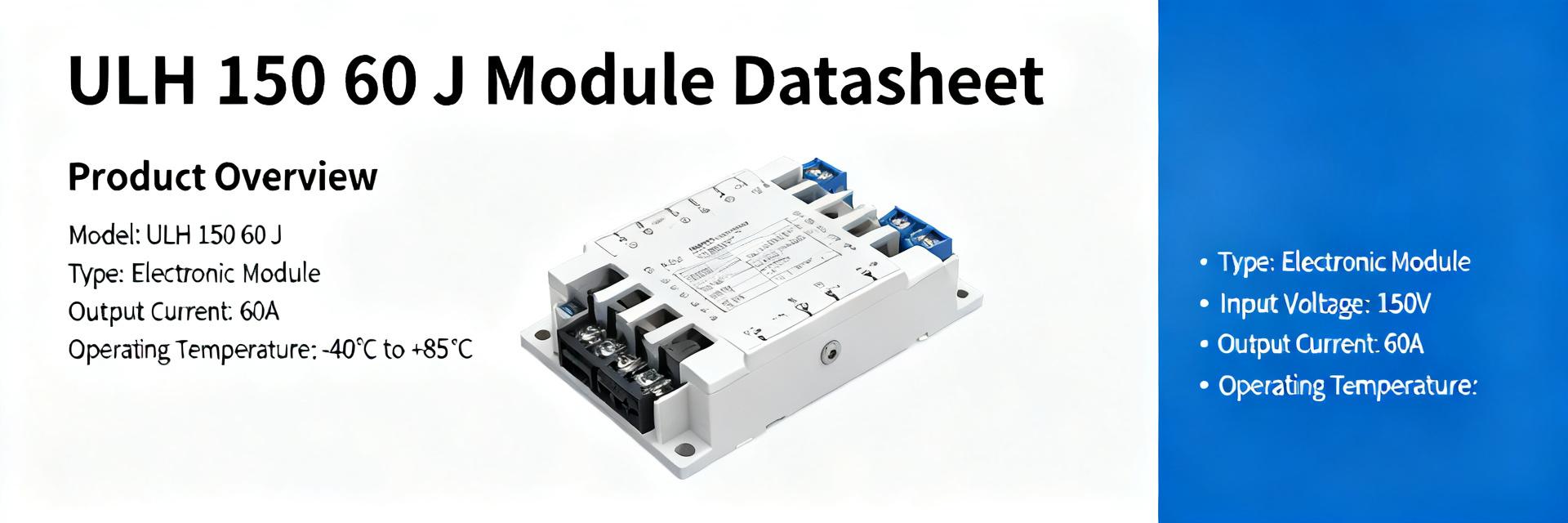
ULH 150 60 J is a module for switching/connection in electrical and climatically demanding environments; its purpose is to ensure reliable electrical and mechanical connection under high vibration loads and temperature fluctuations. The datasheet describes applicable system types: power units, communication and redundancy systems, as well as mounting interfaces and connection recommendations.
Key Design and Operating Features
Structurally, the module includes a housing, a contact group, and a mounting interface; the housing type, dimensions, and weight affect the choice of mounting location. The specification indicates: allowable tightening torque, contact resistance, operating temperature range, and protection class, which simplifies selection during system design.
| Parameter | Nominal / Rating | Note |
|---|---|---|
| Operating Temperature | -40…+85 °C | Specified without contact degradation |
| Contact Resistance | ≤10 mΩ | Measured at rated current |
| Protection Rating | IP67 | With correct assembly |
2. Structure of Technical Specification and Datasheet — Key Priorities (Data)
Specification Sections: Electrical Parameters
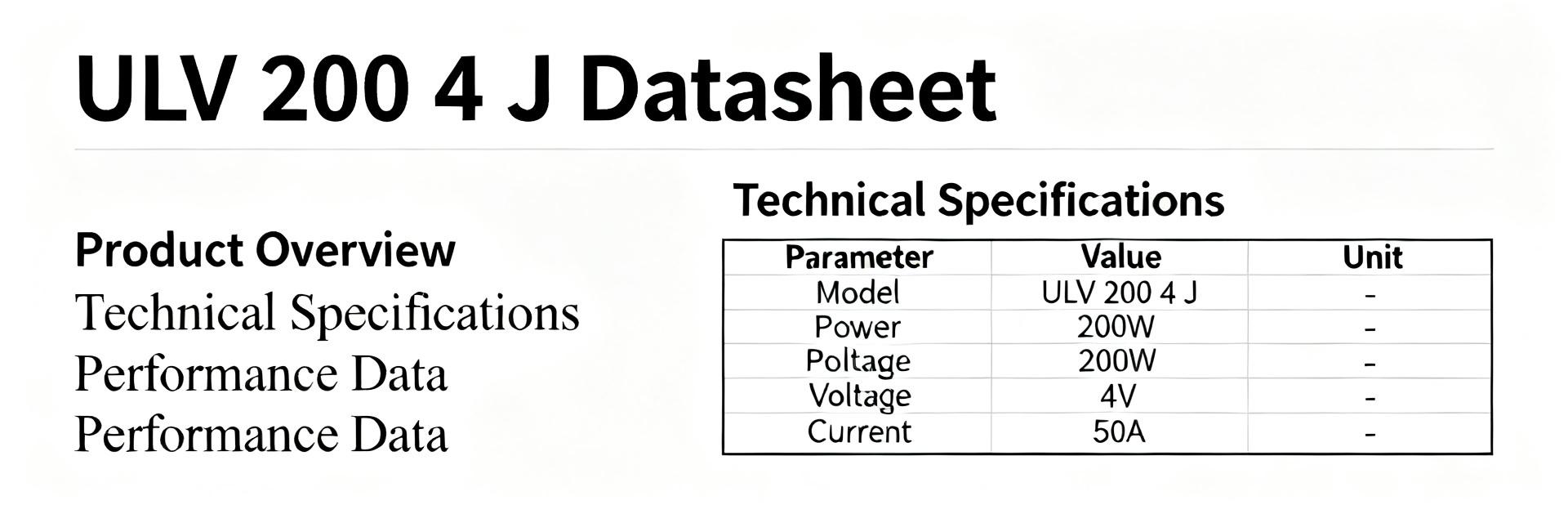
Include typical fields: rated voltage, current, power, leakage current, insulation resistance, temperature coefficients, allowable overloads, and failure criteria. For each parameter, the measurement method, tolerance, and a link to test reports are provided to ensure data comparability between batches and revisions.
Mechanical, Climatic, and Certification Characteristics
The specifications contain: vibration endurance, shock resistance, limit temperature conditions and cycling, IP/IK protection ratings, contact and coating materials. For the designer, it is crucial to see standard tolerances and classifications, as well as test conditions under which the values were obtained (vibration amplitude, test duration, climatic chamber modes).
3. ULH 150 60 J Parameter Table — Complete Set and Designations
Table: Recommended Format and Mandatory Columns
The recommended parameter table contains columns: parameter | value | unit | test condition | tolerance | note. This format simplifies automated validation and parsing of datasheets, allowing quick filtering by criteria such as 'vibration resistance', 'temperature range', and 'electrical resistance' when selecting a component for a system.
How to Interpret Key Rows of the Table During Selection
Interpretation algorithm: cross-check nominal values with project requirements, verify test conditions and tolerances, assess safety margins, and material compatibility. Practical example: if operation in high humidity is required, pay attention to climatic cycle results and contact protective coatings.
4. Application Examples and Practical Verification (Cases)
Industrial and Infrastructure Scenarios
Typical applications: distribution cabinets of power lines, switching modules in telecommunication racks, mounting in moving mechanisms subjected to vibration. Specifications describe typical installation diagrams, standard fasteners, and corrosion protection recommendations; this accelerates integration into existing projects and reduces design time.
Real-World Testing and Quality Control
It is recommended to conduct acceptance testing: visual inspection, assembly and tightening checks, contact resistance measurement, and functional tests under load. Control points include registration of specification versions, batch numbers, and logging test results in the acceptance journal for subsequent auditing.
5. Where and How to Download the Datasheet: A Secure Process
Official Formats and Document Linkage
It is recommended to obtain documentation in PDF format with a digital signature and accompanying metadata (version number, release date, revision notes). For internal use, store ZIP archives with complete documentation packages and test reports, and apply checksums to verify file integrity.
Verification of Authenticity and Document Relevance
Verification algorithm: check the version number, verify the presence of a signature/stamp and change log; match datasheet indicators with the results of incoming quality control of the batch. If discrepancies are found, the document is marked as "unaccepted" and a re-verification procedure with the supplier is initiated.
6. Practical Integration and Startup Guide (Actionable Recommendations)
Control During Installation and Commissioning
Control steps: visual inspection → check of fasteners and seals → verification of current circuits and polarity → temperature monitoring during the first run. Recording parameters in the commissioning report simplifies tracking of early degradation and helps identify installation defects before handover to operation.
Maintenance Regulations and Parameter Monitoring
The regulations include periodic checks of contact resistance, inspection of seals and coating conditions, and repeated functional tests after major repairs. For critical facilities, it is recommended to implement checklists and store results in an electronic log with records of revisions and component replacements.
Conclusion
- ULH 150 60 J is a module with a complete set of parameters; correct parsing of the technical specification and verification of test conditions are essential for proper selection in a project; the parameter table accelerates decision-making and reduces the risk of errors.
- The specification format should include measured values, test conditions, and tolerances; during selection, key criteria remain vibration endurance, temperature range, and contact resistance.
- The acceptance and verification process requires version registration, checksum verification, and test report checks; this practice increases confidence in the completeness and reliability of delivered products.
Frequently Asked Questions
Where can I find the datasheet for this module, and how can I verify its authenticity?
The datasheet is typically provided by the manufacturer or supplier along with the documentation package; you can verify its authenticity by the version number, digital signature, and metadata of the document. In case of doubt, request test reports and cross-check key parameters with the results of incoming quality control.
What key parameters are important when choosing a component for vibration-loaded systems?
Under vibration-loaded conditions, the following are critical: vibration endurance (amplitude, frequency, duration), mechanical strength of mountings, contact resistance after cycles, and fatigue resistance of coatings. Look for tests with specified conditions and safety margins in the datasheet.
How to organize an internal specification versioning system and document control?
It is recommended to maintain a registry of documents with unique version numbers, release dates, and a brief description of changes; archive historical versions of specifications and corresponding test reports. For automation, it is useful to implement a configuration management system with revision history and access control.
What are the basic operating limits for the ULH 150 60 J module?
The basic operating limits of the module include: an ambient operating temperature range from -40 to +85 °C (without thermal degradation of the contact group), a maximum contact resistance of not more than 10 mΩ (measured at rated current), and an IP67 ingress protection rating of the housing, provided that the installation instructions are followed.