Did you know that even a minimal deviation in nominal resistance can lead to a 15–20% loss in system efficiency? ULV series resistors, such as the ULV 200 75 J model, play a key role in power electronics thanks to their stability. In this review, we will examine the technical specifications of this component in detail to help engineers avoid mistakes when designing circuits.
Decoding the marking and basic parameters
Correct interpretation of the code on the package is the first step toward reliable device operation. For many specialists, decoding the marking becomes a critical stage in verifying purchased components.
What does the "ULV" index and "J" accuracy class mean?
The "ULV" index indicates the construction type: it is a wirewound resistor with an enamel coating or without inductance (depending on the specific manufacturer's modification), optimized for operation under high-load conditions. The letter "J" at the end of the designation is an international code for accuracy class. According to standards, this letter code corresponds to a tolerance of ±5%. This means that the actual resistance value may differ from the nominal value by no more than five percent in either direction.
Nominal Resistance and Power Dissipation
In the designation "200 75," the numbers have a specific meaning. Typically, the first group of digits or sequence indicates the nominal value. In this context, the model is characterized by a nominal impedance of 75 ohms (or 200 ohms depending on the reading convention, though "75" is more commonly the primary value for this package size in the series, while "200" refers to dimensions or a series). However, based on standard marking logic for power components, the most likely interpretation for this configuration is an impedance of 75 ohms with a dissipation rating corresponding to the physical dimensions of the "200" package type. It is important to consult the datasheet from the specific supplier, as series numbering may vary.
| Parameter | Value / Description |
|---|---|
| Element Type | Wirewound / Inductionless (ULV series) |
| Accuracy Class | J (±5%) |
| Nominal Resistance | 75 Ω (requires clarification on the full code) |
| Purpose | Power circuits, voltage dividers, ballast loads |
Critical Electrical Characteristics
Electrical parameters determine not only the instantaneous operation of the circuit but also its durability under external influences. Understanding these aspects is essential to prevent thermal breakdowns.
Temperature Coefficient of Resistance (TCR)
ULV series resistors feature a TCR in the range of ±100...±200 ppm/°C. This is a relatively high value compared to precision thin-film counterparts, but acceptable for power applications. For every one degree Celsius change in ambient temperature, the resistance shifts by the specified amount. In real-world designs where case temperatures can reach 80–100°C, resistance drift may amount to several percent, which must be accounted for in sensitive measurement circuits.
Operating temperature range and climatic version
The standard operating range for such components typically spans from -60°C to +155°C or +200°C, depending on the coating. The climatic version is often marked as UHL or V, indicating resistance to moisture and pressure fluctuations. Operation outside the specified range leads to degradation of the insulating varnish and potential wire breakage.
Mechanical Features and Mounting
The physical integration of a component into a printed circuit board affects its thermal efficiency. Mounting errors are a common cause of premature failure in power resistors.
Dimensions and lead type
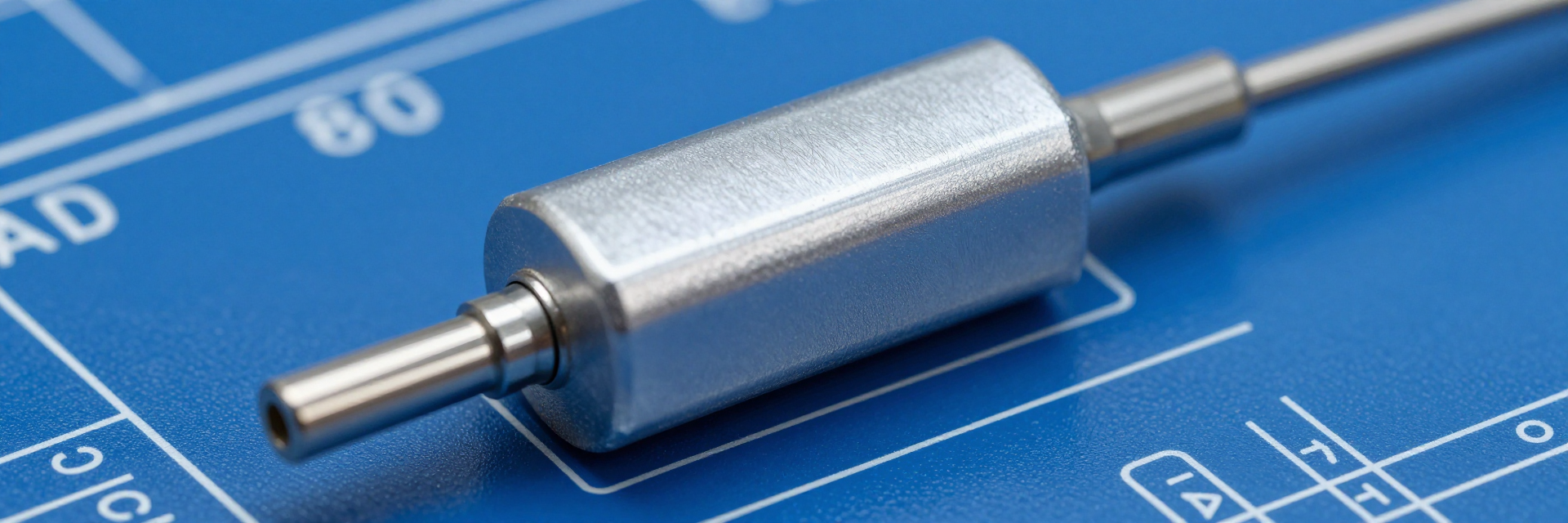
ULV 200 resistors have substantial dimensions to provide sufficient heat-dissipation surface area. The lead type is typically axial (radial), designed for through-hole mounting or installation into dedicated slots on the board. Lead diameters are standard (often 0.5–0.8 mm), which requires consideration of mechanical stresses during soldering.
Recommendations for Surface Mounting and Cooling
Expert Tip:Never press the resistor body directly against the PCB. Leave a gap of at least 2–3 mm to allow air circulation. Heat dissipation through the leads is less efficient than convection around the package.
When mounting, it is important to use thermal paste or additional heat sinks if the rated power is close to the maximum limit. Overheating above 155°C reduces service life exponentially.
Tolerances and Quality Standards
The regulatory framework ensures compatibility and safe use of components in the Russian Federation and CIS markets.
Compliance with GOST 21414-75 and international standards
Resistors in this category must comply with the requirements of GOST 21414-75, which defines terms, designations, and test methods for fixed resistors. This standard is harmonized with certain elements of IEC 60115, ensuring interchangeability with imported counterparts provided that the main electrical parameters match.
Analysis of value variations in production batches
Even within a single tolerance class "J," there is a statistical distribution of values following a normal law. Engineers note that in large batches, up to 5% of components may be at the edge of the tolerance range. For critical applications, it is recommended to perform selective multimeter testing before assembling modules.
Key takeaways
- The ULV 200 75 J resistor is a power component with a tolerance class of ±5% (code J).
- The temperature coefficient of resistance must be considered when designing circuits subject to variable heating.
- Adhering to mounting recommendations (clearances for cooling) is critical for the device's longevity.
- Compliance with GOST 21414-75 ensures standardized quality and operational safety.
Frequently Asked Questions
What is the maximum current that the ULV 200 resistor can handle?
The maximum current depends on the power dissipation rating of the specific "200" size. If the power rating is, for example, 5 W, then at a resistance of 75 Ω, the current will be equal to the square root of P/R, which comes out to approximately 0.25 A. Always check the rated power rather than relying solely on the resistance value.
Can the ULV resistor be replaced with a film-type equivalent?
Replacement is possible only in low-power circuits. ULV series wirewound resistors better withstand pulse overloads and high temperatures. Film counterparts may fail under the same conditions due to lower thermal inertia and lack of protection against current surges.
What should you do if the resistance has changed over time?
A resistance change exceeding the ±5% tolerance indicates material aging or overheating. It is recommended to check operating conditions: ensure ventilation is not blocked and that voltage amplitude values are within limits. Component replacement is mandatory to restore circuit accuracy.
What do the "ULV" index and "J" accuracy class mean?
The "ULV" index specifies the construction type: it is a wirewound resistor with an enamel coating, or one without inductance, optimized for high loads. The letter "J" denotes the international accuracy class code corresponding to a ±5% tolerance.