Choosing the right type of luminous intensity distribution curve (LIDC) is not merely a technical formality, but a critical factor for energy efficiency and visual comfort in indoor spaces. When using FL-1500 series linear LED luminaires, engineers often face a dilemma: whether to select a wide, uniform pattern or a narrow-beam optical system.
In this article, we will thoroughly examine the characteristics of ULV and J type LIDCs, enabling you to accurately calculate illumination levels for retail spaces, offices, and industrial areas without overpaying for excess power.
Fundamental Differences Between LIDCs: ULV vs. J
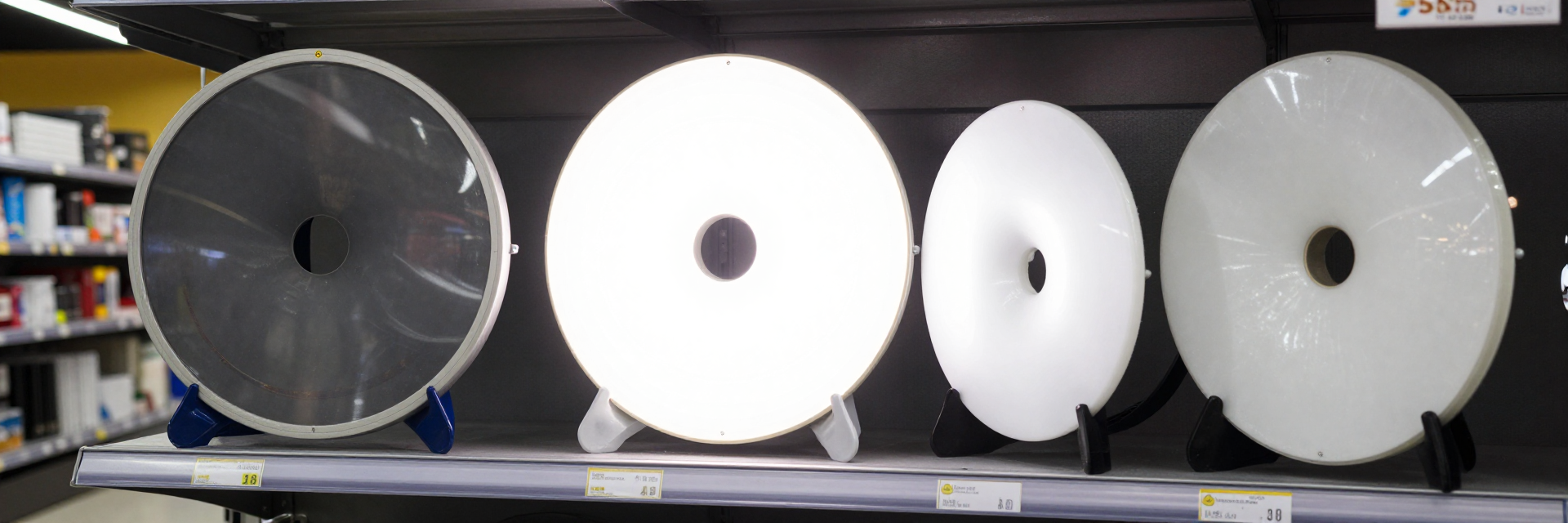
Understanding the physics of light distribution helps avoid common design mistakes. The FL-1500 series offers various optical solutions, each with its own application niche.
Light beam geometry and distribution angles
Type J creates a "light corridor" with a scattering angle of approximately 60°, concentrating energy in a narrow sector. This provides high brightness over a limited area. In contrast, the ULV CRI ensures uniform coverage up to 120°, distributing the beam in a wide arc.
The luminous flux utilization factor (LFUF) varies significantly depending on the type of optics. For standard rooms with a mounting height of 3–4 meters, the ULV type demonstrates a higher LFUF when general illumination is required, whereas the J type is effective only for local backlighting of specific objects.
Purpose and target application scenarios
Type J is ideal for local lighting of work surfaces, shelves, and display cases, where high contrast and emphasis on the product are required. It minimizes light spill into adjacent areas.
The ULV type is optimal for general lighting of large open spaces, open-space offices, and warehouse aisles. Its main purpose is to create an even background without harsh shadows, which reduces eye strain for staff and increases comfort in the area.
| Characteristics | CRI Type J | CRI Type ULV |
|---|---|---|
| Beam Angle | ~60° (Narrow) | ~120° (Wide) |
| Main Applications | Accent Lighting, Shop Windows | General Lighting |
| Uniformity | Low (Localized) | High |
| Luminous Efficacy | High for specific purposes | High for area coverage |
Practical Illuminance Calculation for FL-1500
Accurate selection of the number of luminaires is based on the interaction between mounting height, room depth, and the chosen distribution curve. Below is a methodology to optimize procurement.
Selection Methodology Based on Mounting Height and Room Depth
To determine the required number of units, use illuminance tables. For example, for a hall measuring 10x10 m with a 3 m ceiling and a standard of 300 lx:
- ULV:Fewer luminaires are needed due to wide area coverage, but more fixtures may be required to eliminate unevenness at the edges.
- J:Requires more fixtures to cover the entire area, as each fixture illuminates a narrow strip.
The right choice reduces CAPEX/OPEX. Incorrect optics lead to over-illumination in some areas and under-illumination in others, increasing electricity bills by 15–20% due to excess power.
Key findings and recommendations
- Angle differences:Type J creates a narrow beam (60°) for accents, while ULV provides wide coverage (120°) for general background lighting.
- Economic efficiency:Precise selection of luminaires for the FL-1500 can reduce equipment costs by up to 30%, avoiding unnecessary devices.
- Comfort and UGR:The choice of optics directly affects glare levels; matte diffusers are mandatory for Type J in areas visible to people.
Frequently Asked Questions
Which type of luminaire should be chosen for a retail space with high shelves?
For vertical product illumination and savings on overall ceiling lighting, it is recommended to use Type J luminaires. They direct light specifically onto the shelves, enhancing display contrast and reducing the need for high-power sources throughout the entire store area.
How does mounting height affect the choice between ULV and J?
At mounting heights exceeding 4 meters, the narrow-beam optics of J may create a "zebra" effect or uneven illumination. In such cases, ULV is preferable for producing a uniform light field. However, for spot lighting tasks above workbenches, J remains the better choice regardless of height, provided spacing requirements are met.
Can FL-1500 luminaires with different beam angles be mixed in a single project?
Yes, mixed circuits are often used. However, this requires careful adjustment of the triggers in lighting control systems. Errors during the integration of motion sensors can cause narrow J beams to "cut out" portions of the space, creating uncomfortable shadows for employees.
What is the luminous flux utilization factor (LFUF)?
The LFUF indicates the efficiency of light distribution. For standard rooms (height 3–4 m), the ULV type demonstrates a higher LFUF under general illumination, whereas the J type is effective only for localized object lighting.