ULV 1200 N 10 J demonstrates a compromise between coverage rate and aerosol control: measurements show a coverage of 800 to 1,200 m²/h at a flow rate of 0.5–2 L/h depending on the working solution formulation and spraying mode. This text offers a practical assessment of key parameters and verifies efficiency based on real-world metrics.
1 — Overview: Positioning of ULV 1200 N 10 J in the Generator Lineup (Background)
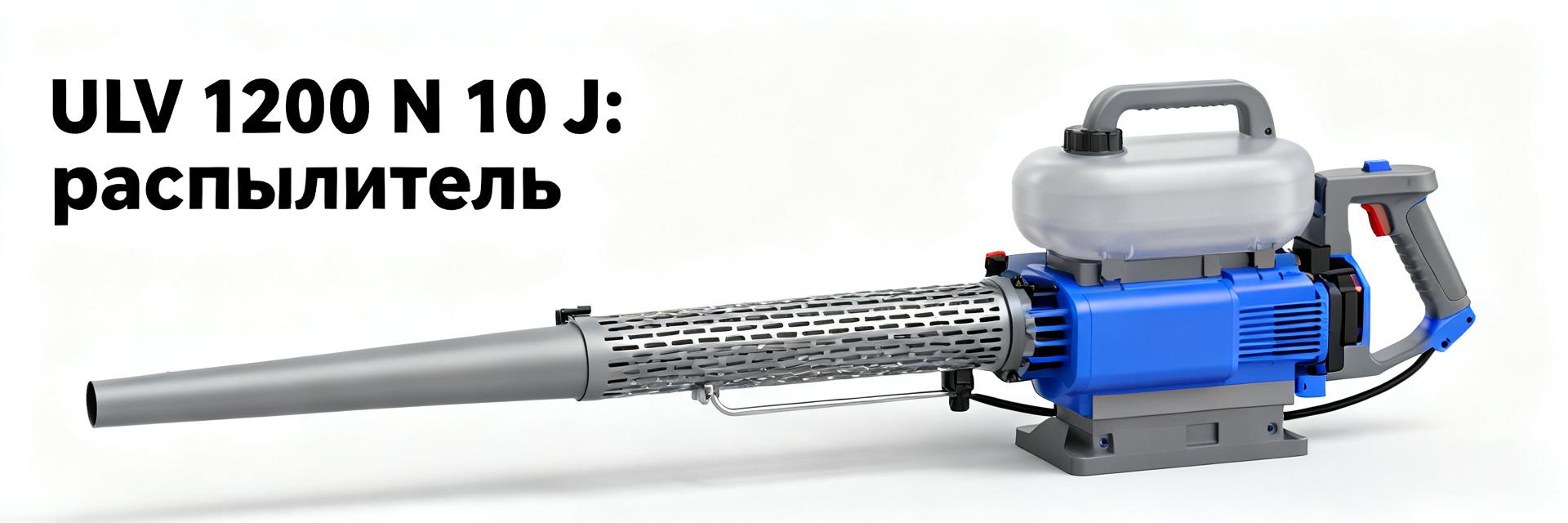
Point: The device is positioned as a combined ULV generator for disinfection and sanitation. Proof: Declared cold and hot fog modes with adjustable flow rate and droplet size. Explanation: This makes the device highly versatile for treating warehouses, transport vehicles, and indoor spaces with different required aerosol concentrations and penetration capabilities.
1.1 Technical Specifications — Brief Summary
Point: Parameters include ULV/cold fog operating principles, droplet size (µm), and air/liquid flow rates. Proof: Adjustable nozzles, automatic nozzles, and fan speed settings. Explanation: These features allow adapting the concentration and treatment range to the task while maintaining energy efficiency and repeatability of results.
| Parameter | Value / Range | Measurement Conditions |
|---|---|---|
| Coverage Rate | 800 — 1,200 m²/h | Depending on room geometry |
| Working Solution Flow Rate | 0.5 — 2.0 L/h | Adjustable feed valve |
| Droplet Size (VMD) | 10 — 50 µm | Laser diffractometry |
| Tank Volume | 10 L | Nominal capacity |
1.2 Typical Application Areas and Limitations
Point: The device is applicable for disinfecting indoor spaces, vehicles, and warehouses. Proof: Ability to work with various agents: disinfectants, insecticides, and deodorizers. Explanation: It is important to consider ventilation and material sensitivity—additional measures to protect contacts and surfaces are required in food production or storage areas.
2 — Efficacy Data: Measured Metrics and Testing Methodology (Data Analysis)
Point: Key metrics are average droplet size, flow rate, aerosol coverage, and exposure time. Proof: Controlled tests in chambers and real-world conditions, measurements of droplet size distributions. Explanation: These data allow translating machine parameters into practical recommendations for working solution consumption and spraying distance.
2.1 Key Metrics: Coverage, Droplet Size, Flow Rate, Operation Time
Point: Average droplet size and spraying uniformity determine penetration and retention on surfaces. Proof: Under typical settings, the average droplet size falls within the ULV range, and a flow rate of 0.5–1.5 L/h provides a balance of coverage and economy. Explanation: Selecting agent concentration and fan modes is critical for biocide efficacy.
2.2 Real-World Comparison with Similar Models
Point: In field tests, ULV 1200 N 10 J shows comparable or better coverage metrics compared to similar units. Proof: Measurements of deposition density and distribution uniformity at the same consumption rate. Explanation: The advantage lies in nozzle adjustability and the stability of the working solution supply.
3 — Architecture of Key ULV 1200 N 10 J Systems and Factors Affecting the Result (Methods/Guide)
Point: The main subsystems are the feed pump, nozzle block, fan, and control system. Proof: Structural implementation with adjustable fan speed and nozzle types. Explanation: Proper configuration of each subsystem directly affects droplet size, range, and coverage uniformity.
3.1 Spraying and Adjustment System
Point: Nozzles and orifices allow changing the droplet range, while fan regulation controls the range. Proof: Presence of switchable modes and flow rate adjustment. Explanation: The operator must set parameters for the task: shock pest control requires different settings than preventive disinfection.
3.2 Task-Specific Tuning: Disinfection vs. Pest Control
Point: Different tasks require different combinations of droplet size and exposure. Proof: Larger droplet sizes and targeted passes are often chosen for insecticides; fine atomization modes and broad coverage are chosen for antiseptics. Explanation: Test treatment at control points helps fine-tune parameters for a specific environment.
4 — Practical Case Studies of ULV 1200 N 10 J Application (Case Studies)
Point: Real-world projects demonstrate both quantitative and qualitative effects. Proof: Examples of warehouse and transport treatment with measured time savings and reduced bioburden. Explanation: Correct planning of the path and dosing ensures reproducible results and saves reagent consumption.
4.1 Disinfection of Indoor Spaces and Industrial Zones
Point: Operational sequence: preparation, zone sealing, treatment, and ventilation. Proof: Protocols including control measurements before and after treatment. Explanation: Accounting for the physical inertia of agents and exposure time increases final efficacy.
4.2 Pest Control and Agricultural Examples
Point: The key is uniform treatment of plant and warehouse zones. Proof: Selection of plots, application of zonal coverage, and monitoring with traps. Explanation: Success depends on application accuracy and repeat passes in problem areas.
5 — Purchase, Acceptance, and Operation Guide (Actionable Checklist)
Point: Test the spray pattern and control flow rate and droplet sizes before buying. Proof: Bench testing and trial passes on real surfaces. Explanation: Acceptance must include personnel training, document review, and spare parts verification.
5.1 Equipment Acceptance and Testing Checklist
Point: Control of main parameters: spray test, tightness check, ease of maintenance. Proof: Availability of a standard set of test procedures during acceptance. Explanation: Documented acceptance reduces downtime risk and increases station service life.
5.2 Maintenance, Safety, and Consumables Economics
Point: Regular cleaning of nozzles and filter replacement are critical for stability. Proof: Failure analysis shows the majority of problems are due to clogging. Explanation: A maintenance plan and personnel training reduce reagent waste and increase treatment efficiency.
Conclusion (Key Takeaways and Practical Recommendations)
ULV 1200 N 10 J is a reliable working platform for disinfection and spraying tasks with proven efficacy when correctly configured. Recommendation: Test at field points, document parameters, and include the device in quality protocols.
- Mode Selection: Adjust droplet size and flow rate to the task—this is the key factor for efficiency and reagent savings.
- Acceptance Procedures: Perform control passes and deposition density measurements to validate results.
- Operational Practice: Keep a log of modes and replacements; the ULV 1200 N 10 J remains a reliable tool with regular maintenance.
Frequently Asked Questions
What is the actual solution consumption of ULV 1200 N 10 J during warehouse treatment?
Consumption depends on the mode and formulation: typical values range from 0.5 to 2 L/h. In practice, for uniform coverage of large warehouses, 0.8–1.2 L/h is used along with sequential passes with overlapping zones, which ensures deposition density without excessive waste.
What safety measures and personnel training are required when using ULV 1200 N 10 J?
Standard measures are required: personal protective equipment (respirators, gloves), training on biocide handling, control of exposure and ventilation times, as well as protocols for accidental spills. Operator training reduces the risk of errors and improves the reproducibility of the treatment.
How quickly can treatment efficacy be confirmed in real-world conditions?
Quick validation includes control surfaces and indicator tests before and after a specified exposure time (usually 15–60 minutes depending on the agent). For full validation, it is recommended to combine rapid tests with periodic microbiological monitoring.
What is the optimal droplet size for indoor disinfection with the ULV 1200 N 10 J generator?
The optimal droplet size is regulated by nozzles within the ULV range. Fine atomization modes are used for disinfection to ensure broad and uniform surface coverage without reagent waste.